Packaging and recycling: how PPWR, design for recycling and new materials will change the European supply chain
With the introduction of the PPWR (Packaging and Packaging Waste Regulation), Europe’s packaging sector will face a deep transformation. Requirements on recycled content, recyclability criteria, digitalisation and traceability will directly impact production processes and industrial machinery. To better understand how the sector will evolve over the coming years, we spoke with Fabrizio Di Gregorio, Technical Director at Plastics Recyclers Europe, the European association representing the plastics recycling industry, and technical Lead for RecyClass, the cross-industry platform bringing together material producers, converters, brand owners and recyclers to develop testing protocols and European guidelines for plastic packaging recyclability.
In the coming years, plastic packaging will be required to contain increasing amounts of post-consumer recycled material, including in food-contact applications. At the same time, packaging will need to be designed from the outset to facilitate collection, sorting and recycling at scale, while digital traceability will become increasingly important throughout the value chain.
 Mr. Di Gregorio, how will European standardization influence the design of industrial machinery?
The new European regulatory framework will have a significant impact on industrial machinery as well. Production lines will need to process materials redesigned for recyclability, mono-material structures and substrates containing post-consumer recycled plastics.
This will require greater flexibility and the ability to adapt to increasingly demanding technical specifications, especially considering the variability that is typical of post-consumer recycled materials.
When will the new PPWR provisions become applicable?
The Packaging and Packaging Waste Regulation (PPWR) officially entered into force on February 11, 2025. However, its operational provisions will become fully applicable from August 2026.
By that date, manufacturers will be required to issue a Declaration of Conformity covering Articles 5 to 12 of the Regulation, with particular attention to requirements related to Substances of Concern and recyclability.
In the following years, several secondary legislative acts will be introduced to implement the PPWR, including measures concerning recyclability criteria and mandatory recycled-content targets, which are expected to apply from January 1, 2030.
Which packaging and labelling formats are most likely to be penalised?
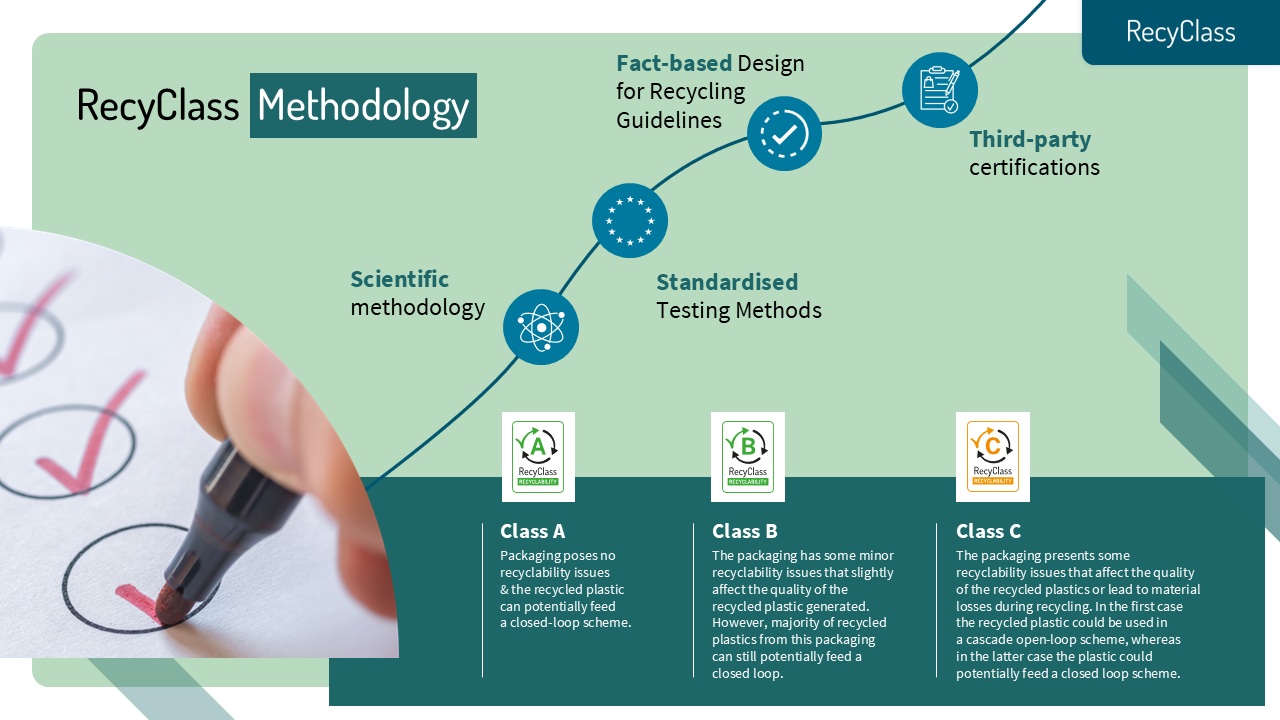
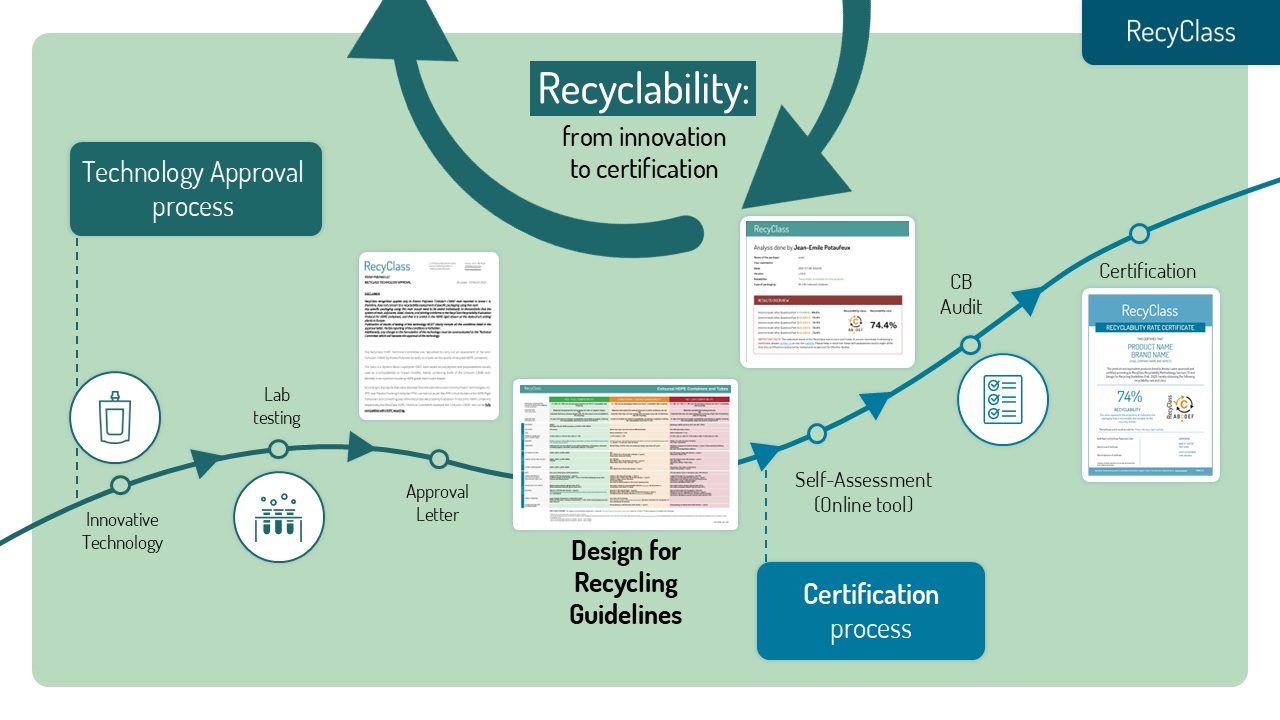
In recent years, European initiatives such as RecyClass have developed testing protocols to assess the recyclability and sortability of plastic packaging, contributing to increasingly detailed design-for-recycling guidelines. Among the solutions considered most problematic are non-separable multi-layer packaging structures, full-body labels, labels that cannot be removed during recycling processes and adhesives that interfere with recycling. Certain ink technologies, such as nitrocellulose-based inks or inks that release components into water streams, are also regarded as critical factors.
As a result, the industry is developing alternative solutions capable of balancing packaging functionality, shelf appeal and end-of-life recyclability.
What direction is packaging and label design taking?
The evolution of recyclability requirements is substantially changing packaging design, particularly for plastic applications. Structures will need to become simpler and move as close as possible toward mono-material solutions.
Labels will also be affected by this transition. They will need to become smaller or thinner to improve packaging sortability and be easily removable during recycling processes.
At the same time, there will be a significant reduction in elements that interfere with recycling, including functional barriers, additives and fillers. In some sectors, product shelf life expectations and logistics models may also need to be reconsidered.
What new requirements will emerge for materials and adhesives?
From 2030 onward, only packaging classified as recyclable according to the future European recyclability grades A, B or C will be allowed on the European market.
Packaging made from materials lacking an established industrial collection, sorting and recycling infrastructure will gradually disappear. For plastic packaging, polymers such as LDPE, HDPE, PP, PET and PS are likely to be favored over other materials, although they will still need to comply with harmonized European recyclability criteria expected to be finalized by 2028.
Materials will need to be tested and validated to verify their compatibility with recycling processes. Labels will have to be compatible with plastic packaging and must not interfere with sorting operations. Printed surface coverage is also expected to become more limited, while lighter colors will be preferred.
Adhesives will increasingly move toward wash-off technologies, while mandatory recycled-content claims will need to be supported by certified and traceable systems.
Where are the main challenges in the recycling value chain today?
Separate collection remains the most complex and costly stage from both an economic and logistical perspective.
Despite European targets, significant volumes of packaging are still not collected for recycling and instead end up being incinerated, landfilled or exported.
Another critical challenge is sorting. Packaging that is collected but not correctly sorted cannot be recycled and generates both economic and environmental costs.
Meeting future regulatory targets will therefore require substantial investments in collection, sorting and recycling capacity, as well as advanced technologies capable of producing increasingly high-quality recycled feedstock.
Which innovations are expected to have the greatest impact on packaging machinery?
Alongside innovation in packaging design, advances in production, sorting and recycling technologies will be equally important.
Over recent years, new technologies have emerged that make packaging identification and sorting more efficient and accurate. Artificial intelligence is helping recycling facilities automatically recognize different plastic types, while digital watermarking introduces invisible codes on packaging to facilitate identification throughout the recycling process.
Mechanical recycling technologies are also evolving rapidly. The objective is to obtain cleaner and safer recycled materials that can ultimately be used again in food-contact packaging applications.
Increasing regulatory pressure will require more advanced systems for tracking both virgin and recycled materials. In this area, RecyClass is developing a blockchain-based project aimed at digitalizing the traceability of recycled plastics throughout the value chain.
PPWR at a Glance
The PPWR (Packaging and Packaging Waste Regulation), EU Regulation 2025/40, entered into force in February 2025 and represents the new European framework governing packaging sustainability.
Its objective is to make all packaging recyclable by 2030 while reducing packaging waste generation and accelerating the transition toward a circular economy.
Key PPWR Requirements
Timeline
• Regulation entered into force in 2025.
• Main implementation requirements will start applying from August 2026.
Recyclability
• All packaging placed on the EU market must be designed for recycling by 2030.
Recycled Content
• Mandatory minimum levels of recycled plastic content will apply to plastic packaging, including food-contact applications (for example, PET packaging).
Waste Reduction Targets
• 5% reduction by 2030.
• 10% reduction by 2035.
• 15% reduction by 2040.
Reuse and Compostability
• Increased incentives for reusable packaging systems.
• Mandatory compostability for specific applications, such as fruit and vegetable labels and coffee pods, by February 2028.
Empty Space Reduction
• Empty space in packaging, including e-commerce shipments, must not exceed 50%.
Harmonized Labeling
• Standardized labeling systems will be introduced across the EU to facilitate consumer understanding and improve separate collection.
Unlike the previous Packaging Directive 94/62/EC, the PPWR is a Regulation and is therefore directly applicable across all EU Member States, ensuring a harmonized framework for reducing environmental impact and promoting circularity throughout the packaging value chain.